Ravenshead lies 10.7 road miles due north of the city centre
Skylights and rooflights in Ravenshead
A large village in Sherwood Forest country, part of Nottinghamshire's Hidden Valleys area. Daylight is the thing a Ravenshead room tends to lose first, so that is where we start.
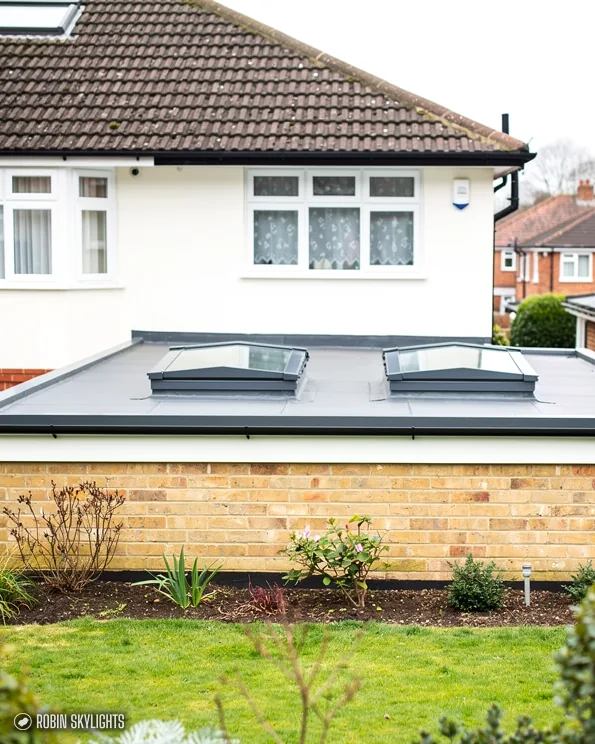
Robin Hood country, and a firm named for the robin
The legend of Robin Hood centres on the part of Sherwood Forest where Ravenshead stands. Our name comes from the other robin, the small bird that stays and sings all winter, which is a fair description of how we like to plan light for a village under trees.
Ravenshead, under the Sherwood canopy
Ravenshead is a big Nottinghamshire village with a parish of 5,370 people, and it borders Papplewick, Newstead Abbey and Blidworth. It belongs to the county's Hidden Valleys area. This page follows the forest setting, the council and the roads, then the practical side of fitting glass into a roof, whatever the age or type of the house. For the service in full, see skylight installation in Nottingham.
01
Under the trees: what a wooded village does to a roof
Ravenshead stands in the part of Sherwood Forest that the Robin Hood legend belongs to. Sand quarrying was the village's only other industry. For a house standing close to trees, the forest setting has a very practical side.
Trees help a village feel calm and cost a room its daylight. A canopy cuts the light that reaches the windows, and in the grey months it does so just when sun is scarce anyway. That is why homes in woodland settings so often have a back bedroom, a kitchen or a landing that feels dim by mid-afternoon. A rooflight looks up above the branches, into the widest part of the sky, which is why it can make such a visible difference.
Leaves, needles and moss
Anything that falls on a roof ends up against whatever stands proud of it. A rooflight upstand is exactly that. Leaves bank up against it, hold water, and in time a green film forms along the edge. We detail the surround so that debris has little ledge to settle on: a tall enough upstand on a flat roof, a flashing profile on a pitched one that sheds rather than traps.
It also helps to think about where the opening goes. Directly below an overhanging bough is the worst spot, since the droppings from branches and sap stay on the glass. We look at the trees on the survey and, where we can, move the rooflight a metre or so clear.
Cold damp air
Shade keeps walls and roofs cooler, and cooler surfaces collect condensation. Good glazing with insulated edges, plus a way to let steam out of the room, keeps the pane dry through January.
02
Gedling Borough Council and four listed buildings
4Grade II
Historic England entries across the wider area
1.5km
km radius around the village centre
Your planning authority in Ravenshead is Gedling Borough Council. That is who answers questions about whether a roof opening needs consent and who holds the Building Control side for jobs that go through the council.
Listed buildings near the village
Is a conservation area close by? Not at 1.5 km from the village centre or nearer, and Gedling confirms the position for your own address before any order goes in. Historic England lists four buildings across that wider area, all Grade II.
So the sensible approach is to check the specific address. A listed house needs separate consent before the roof is cut. If an Article 4 direction covers the street, the usual permitted development right may not apply. We make that enquiry with Gedling before anything is ordered, and we pass on the answer in plain words.
One more local quirk: the boundary
Ravenshead's parish is a relatively recent arrangement. Before 1987, most of it belonged to the parish of Blidworth, which lies in the Newark and Sherwood district, and part came from Newstead, already in Gedling. The practical lesson is that boundaries here are not always where people think. If your property is close to the edge of the village, it is worth confirming which council actually covers your house.
Ravenshead paperwork: who files what
For the planning exemptions that cover most rooflights and the building rules that govern a new opening, read the planning guide for rooflights. Where your job is notifiable, Building Control hears from us, and the work is finished to the regulations in force on the day. Before you commit, tape the proposed opening on the ceiling and look at it on a dull afternoon.
03
The A60, the B6020 and a village with no station
Due north of the city centre, Ravenshead is 10.7 road miles away, around 25 minutes in a van with ordinary traffic. Two classified roads touch the village within roughly a kilometre of its middle, the A60 and the B6020. Nothing on rails is mapped within 2 km, no station and no tram stop, so the van is how we arrive.
Beside the A60 stands the Sheppard Stone, a roadside marker below Portland College that is still regularly looked after. It is a handy local landmark when someone is describing where they live, and we will happily take a postcode or a landmark when we book.
What the visit involves
You pay nothing for the survey. We want to see the room that disappoints you first. We stand where you stand, look at the ceiling and the light, and ask what time of day it feels worst. Next we climb up to examine the roof: what covers it, what holds it up, and how rain leaves it.
After that comes a written quote with a fixed price. Because it is fixed, a surprise on the day should not arise. If we find something unexpected under the covering, we say so at the survey stage when we can, and the written figure still holds.
10.7road miles
to the centre of Nottingham
25minutes
drive in, ordinary traffic
Access on wooded plots
If your house is set back on a long drive or behind a narrow gate, tell us. When we arrange the survey we ask about the approach so the right ladders and equipment come with us. It saves everybody time.
Further afield
Ravenshead is one of many places we cover. The whole list sits under areas we cover, out to thirty miles of driving from the city.
04
Houses of every age, and how we read yours
A survey does not start from the type of house. It starts from the roof, the loft and the rooms below, and that order holds on every street in a village like this.
Step one: find the dark room
Almost every home has a room that stays dim from October to March. It is rarely the biggest one. More often it is a landing, a hallway, an inside bathroom, or the back of a kitchen where the window sits too far away. We begin with that room and ask what is above it.
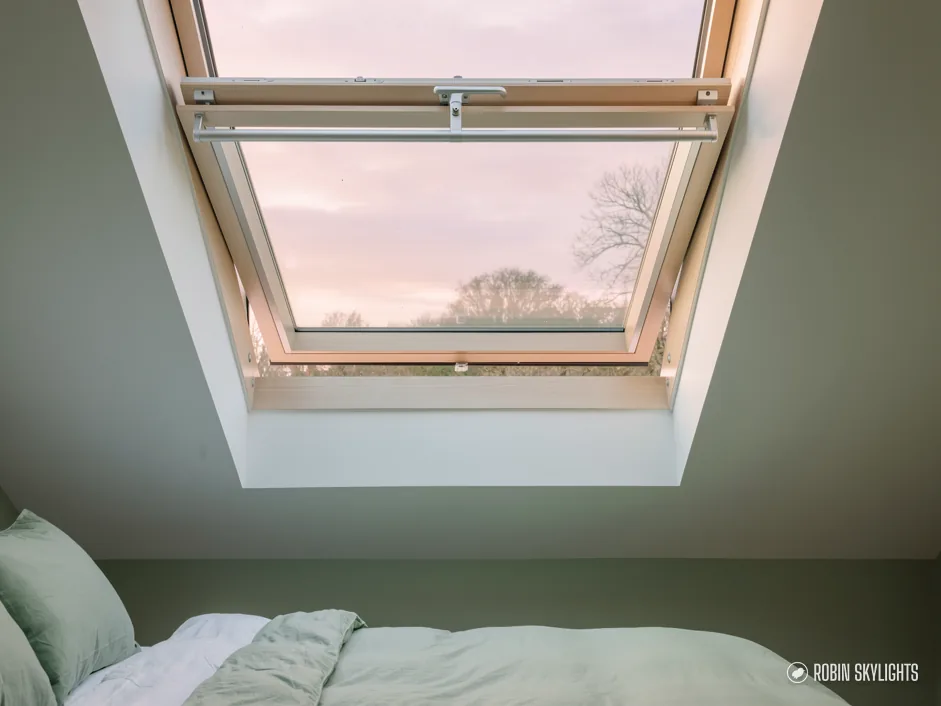
Step two: read the roof
Above the room there may be a pitched roof with a loft, a flat roof over an extension, or a room built into the roof itself. Each calls for a different product.
- A pitched slope over a loft room takes a roof window.
- A flat roof over a kitchen or dining space takes a low rooflight or a glazed lantern.
- A landing or bathroom with loft space above takes a sun tunnel.
- Truss
- A factory-made roof frame that carries the load and cannot be cut without extra support.
- Rafter
- A sloped timber running from ridge to wall plate.
- Diffuser
- The panel in a ceiling that spreads the light from a sun tunnel.
Step three: check the structure
Older roofs have hand-cut rafters that rarely sit at regular intervals. Newer ones use factory trusses that must not be cut without extra support. Either way, we look from inside the loft, measure what is there, and design the opening around it. That is why the survey comes before the price.
Replacing an existing unit
If you already have a rooflight that has misted between the panes or leaks at one corner, fitting the new unit into the same opening is often the tidier route. We will tell you at the survey whether that works or whether the surround needs rebuilding.
05
Keeping a rooflight clear through a Sherwood winter
A rooflight in a wooded village earns its place in autumn and winter, which is exactly when the surroundings work against it. Wet leaves, low sun and long damp spells all test the way it was fitted.
The seal and the surround
Most leaks around a rooflight start at the junction between the frame and the roof, not through the glass. On tile or slate we use a flashing kit cut to the profile of the covering. On a flat roof the raised edge is sealed to the membrane and finished so water can leave in every direction. We check both at the end of each job.
Light that works under cloud
In the dull months, sky light is soft and flat. A rooflight with a wide opening over the middle of the room spreads that light more evenly than a narrow one close to a wall. If the room is deep, a lantern or a long flat rooflight reaches the part that daylight from the side window never touches.
The guarantee in writing
Every job carries a ten-year workmanship guarantee, given to you in writing. It covers our fitting, so if something goes wrong at the junction because of how we installed it, we put it right.
Booking
The easiest way to start is the form on this page, or a WhatsApp message to 07880 284133. Tell us which room feels darkest and roughly where your house sits, and we will arrange the survey. See the wider picture of what we fit if you are comparing options.
Ravenshead: trees, consent and a dark back room
Is Ravenshead in a conservation area?
Not at 1.5 km from the middle of Ravenshead or nearer. We confirm that against the council's own list for your street. Gedling Borough Council is the authority. We check your address with them before ordering, and say so clearly if anything affects your roof.
Trees overhang our roof. Will that spoil a rooflight?
It does not spoil it, but it changes how we fit it. We keep the glass out from directly beneath overhanging branches where we can, and we shape the surround so leaves wash off. An occasional clear-out in autumn is all most owners need to do.
Can an old, cloudy rooflight be swapped for a new one?
Yes. Cloudiness inside the glass means the sealed unit has given up. Often the new unit drops onto the opening already there, which keeps the work tidy. If the surround is damaged, we say at the survey, and the written quote covers whatever is needed.
Who deals with Building Control?
We do, whenever Building Control must be told. Either the council or a registered building control approver receives the notification. The rooflight itself is fitted to current Building Regulations. You keep the paperwork when the job ends.