Out along the west-south-west road, 7.2 miles from central Nottingham
Skylights & rooflights in Sandiacre
A canal town on the Derbyshire side of the line, with a converted lace mill at its centre and the M1 running past. Kitchens, landings and back rooms here can stay dim well into spring.
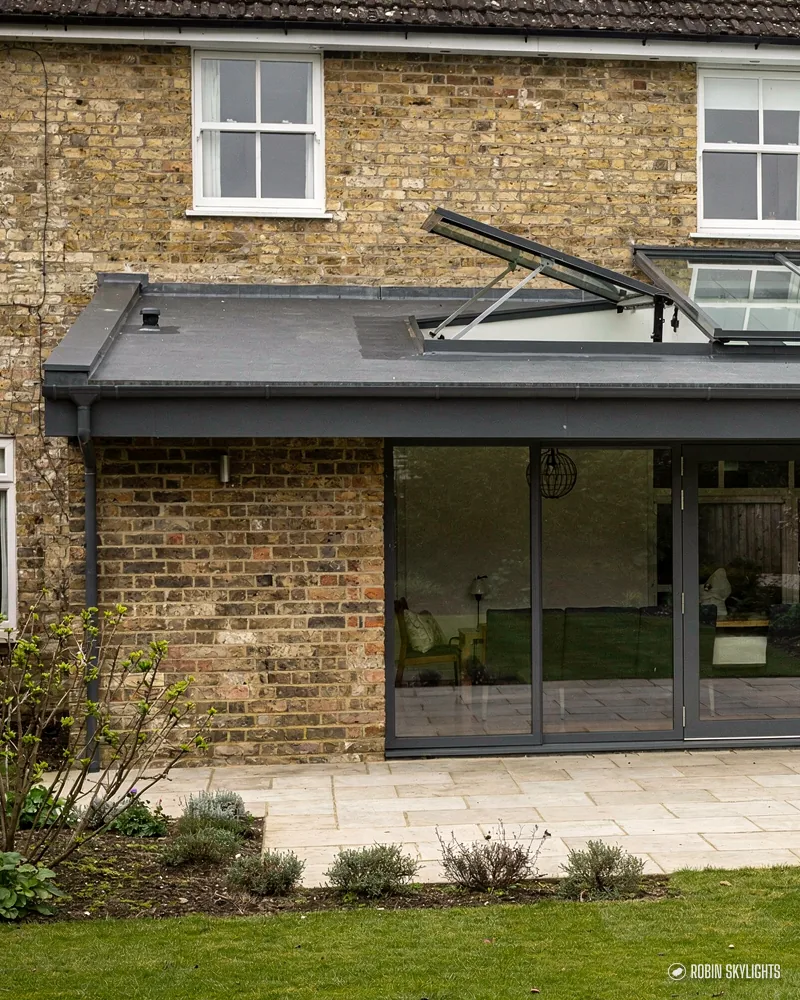
Three conservation areas, all carrying the town's name
Sandiacre Canal Side, Sandiacre Lock and Sandiacre Cloud Side carry one designation date, 27 March 1984. All three lie within about 0.6 km of the town centre point, and any roof near them gets a second look from us before glass is ordered.
Sandiacre, read from the towpath up
Sandiacre is a Derbyshire town in Erewash borough, right on the Nottinghamshire line, and 8,889 people lived in the parish at the 2011 Census. The city is a short drive away, but the council is different and the canal gives the town protected corners of its own. Below are the things we weigh up here before suggesting any glass, starting with the old mill. Our wider work is set out under skylight installation in Nottingham.
01
A lace mill, now flats, and what that does to a roof
Springfield Mill stands beside the canal in the middle of the town. Built in 1888 to make lace, it is now a block of modern apartments. It tells the story of Sandiacre in one building: a place of work turned into homes, under a roof that now has to keep residents dry and warm.
Flats are a special case. Permitted development for a house rooflight stops at the front door of a flat or maisonette, so an apartment roof can call for a full planning application where the house next door would not. If you own or manage a flat here, say so in your first message and we will explain what is likely to be needed.
Top-floor flats and long corridors
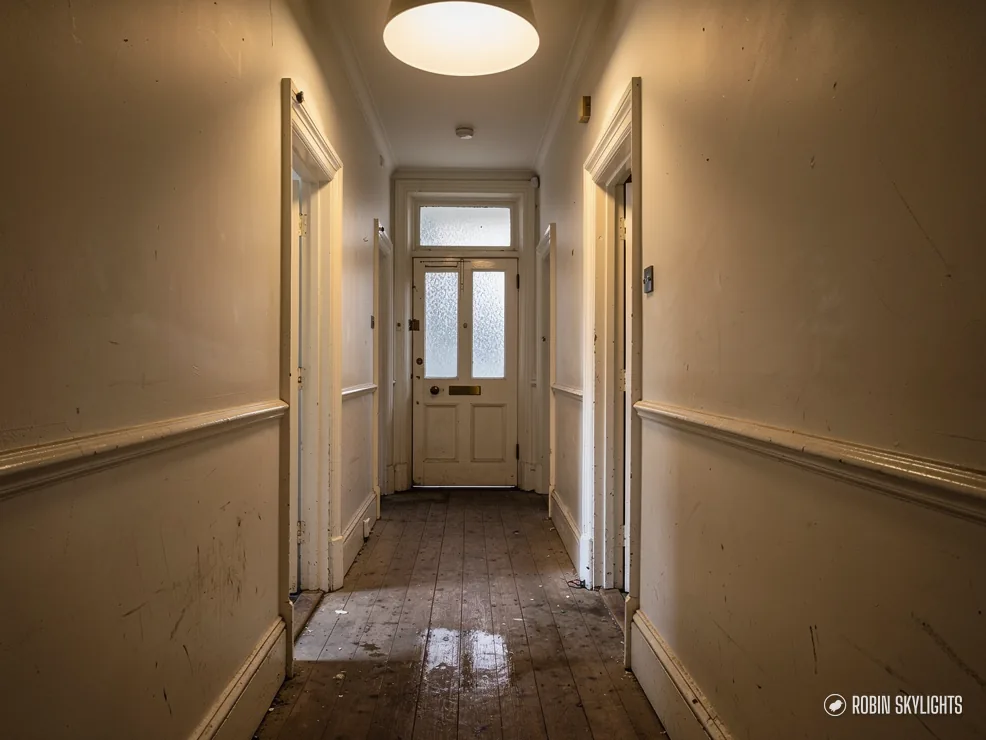
A converted mill tends to have deep floors and corridors that sit away from any window. This is the kind of space a rooflight suits, provided the owners of the building agree. A roof window over a stairwell, or a sun tunnel to a hallway, can lift a space that has depended on artificial light for years. A leaseholder usually needs the freeholder's consent, and we can back that conversation up with measured drawings from the survey.
The ironstone behind the town
Industry here began well before lace. Local ironstone led to the development of Stanton Ironworks in 1787. That history matters for the survey in one small way: buildings in an industrial town are often altered, extended and patched over generations, so we never assume a roof is built like the one next door. We look at what the loft shows us, measure it, and only then name a size.
02
Erewash Borough Council, and three canalside conservation areas
Because Sandiacre is in Derbyshire, planning questions go to Erewash Borough Council. The city council has no say on a Sandiacre roof, and neither does Broxtowe across the boundary.
Canalside designations and listings
Three conservation areas carry the town's name. Sandiacre Canal Side covers the town centre point and holds three listed buildings, all Grade II. Sandiacre Lock lies about half a kilometre away and holds four, also Grade II. Sandiacre Cloud Side, a little further at 0.58 km, holds two: one Grade I and one Grade II. A fourth area, Stapleford Church Street, sits about 1.2 km off but belongs to the neighbouring town.
Historic England logs 19 listed buildings close to the centre: two Grade I, one Grade II* and sixteen Grade II.
| Area | Distance | Listed inside |
|---|---|---|
| Sandiacre Canal Side | At the centre | 3 (Grade II) |
| Sandiacre Lock | 0.5 km | 4 (Grade II) |
| Sandiacre Cloud Side | 0.58 km | 2 (Grade I, II) |
How we treat a roof near the canal
A listed house needs listed building consent before the roof is opened. Inside a conservation area a house is normally still covered by permitted development on either slope, and we confirm there is no Article 4 direction first.
We ask Erewash directly rather than trust a map, because the council holds the current position on any designation or direction covering your street. The national conditions are written up once, in the planning guide for rooflights, so they stay correct. Where Building Control must be told about the work, we send that notification ourselves. Ask about warm-edge spacers.
03
Canal water, parks and the damp that comes with them
What a wet setting asks of a roof from October to March.
The Erewash Canal passes through the centre of Sandiacre. The small basin just above Sandiacre Lock, number 11 on the canal, was once the end of the former Derby Canal. The River Erewash runs close by too. Doncaster Avenue Recreation Ground, St Giles Park and Queen Elizabeth II Park are all inside a mile of the centre, and Stoney Clouds, Toton Washlands and other nature reserves lie just beyond.
All that open ground and moving water makes for damp air and trees. Neither is a problem if the roof is detailed for it, but both are worth planning around.
Leaves, moss and standing water
Near parks and canal banks, leaves collect against any upstand, the raised frame that a flat rooflight sits on. If they sit damp through a grey November they hold water against the seal. We set the upstand tall enough for the roof finish to run away from the glass, and we leave room to sweep around it. On a pitched roof, moss builds up on the lower edge of a flashing, and we match the flashing kit to the roof covering, then show you where to look each autumn.
Cold glass near the water
Damp air meets cold glass first. On a raw morning, steam from a kitchen settles on the inner pane and runs. Warm-edge spacers keep that pane nearer room temperature, and an opening sash sends steam outdoors before it turns to drips. At the back of a canalside kitchen, decide this before the first winter, not after.
04
Getting to you: the M1, the A52 and a tram stop at the edge
Road distance from the city centre is about 7.2 miles, heading west-south-west, and the drive takes around 16 minutes. Junction 25 of the M1 lies in the town, where the motorway crosses the A52 Brian Clough Way. The A52, B5010 and B6002 are also close to the centre, so most streets are quick to reach.
Public transport is thinner than the roads suggest. The nearest NET tram stop is Toton Lane, 1.9 km from the centre, and the former Stanton Gate station nearby is closed. For a survey visit that changes nothing: we drive to you.
Your survey visit
Nothing is charged for the visit. In the room we note where daylight fades, then we go up and study the roof: pitch, covering, rafters and the path rainwater takes. Only then do we write a price down, and it stays put: what you agree is what you pay when we finish.
7.2miles
road distance into the city centre
16minutes
in the van, traffic allowing
Access on a canalside street
If your street is narrow, or the house backs onto a path rather than a road, tell us. Before we visit, we ask how a ladder can reach the back of the house and where a van can pull up without blocking a neighbour. A quick WhatsApp message is enough to settle it.
The full list of places we cover runs from Stapleford and Long Eaton to villages further up the Erewash valley. Sandiacre sits well inside the 30 road miles we work to.
05
What tends to suit a canal town like this
Every house differs once you are inside the loft, so treat these as starting points that the survey then tests against your own roof and rooms. They follow the town's character: industrial buildings, later alterations, and rooms that were never designed for much daylight. Sandiacre has a working past, with an ironworks, a lace mill and a canal.
That is useful to know before a survey. A roof that has been altered more than once can hide odd framing, an old patch of felt or a chimney that no longer serves anything. None of it rules out a rooflight, but it does shape where the opening can go and how much of the existing roof we need to rebuild around it.
A long kitchen or back extension
Where an extension runs deep, the far end loses light. A roof lantern draws light from several faces at once, so it stays bright under cloud, and it adds height to the room. A flat rooflight over the darkest section does a similar job in a plainer way, and the flat roof rooflights hub covers the frame and the glass.
A loft room or a flat's top floor
A roof window suits a pitched slope. From a bed or a stair you see sky, and the sash opens for air. In a converted building, the freeholder's agreement comes first and the design follows from it.
- Upstand
- A raised frame around the opening in a flat roof, which the glass is fixed to and which keeps water off the seal.
- Freeholder
- The owner of the building a flat sits in, whose consent a roof change usually needs.
- Trickle vent
- A small slot in a frame that lets a little air through, helping to clear steam.
Swapping a tired Sandiacre rooflight for a new one
A unit that has fogged between the panes, or leaks at the edge, can often be swapped on the opening it already has. The survey tells us whether the frame and upstand can stay. Whether the unit is new or a replacement, the fitting is built to the current Regulations, and our workmanship guarantee runs for a decade, set out in writing.
Erewash, flats and canalside damp
Who decides on a new rooflight here, Erewash or Nottingham?
Erewash Borough Council, because Sandiacre sits in Derbyshire. A rooflight on an ordinary house often needs no planning application, yet a listed house, a flat or a street under an Article 4 direction in one of the town's three recorded conservation areas can alter that. We put your address to the council first, then quote.
I live in a flat in a converted building. Can I have a rooflight?
Possibly, though flats follow different rules. Planning may be needed, because the usual house allowance does not reach them, and the freeholder normally has to agree too. Tell us at the start. We survey the roof, explain what is likely to be needed and quote in writing.
Our kitchen rooflight gets damp inside every winter. Is it the glass?
It may be condensation rather than a leak. Cold glass catches steam from cooking, and a house beside a canal can have damp air to deal with as well. We look at the glazing, the vent and the upstand on the survey. If the unit has failed between the panes, a swap on the existing opening is often all that is needed.
Does the survey cover streets outside the town centre?
Yes. Sandiacre and the villages around it all fall inside the 30 road miles from Nottingham that we work across. The survey is free anywhere in that area. We come to you, since we run no showroom, so message us and we will fix a visit.