27.8 road miles south-south-west, at the far edge of our patch
Skylights & rooflights in Desford
A hilltop village with a conservation area at its centre and larger houses that were built for people commuting to Leicester. Roofs here reward a careful look.
Brick laid in a pattern three centuries old
An early eighteenth-century service wing in Desford is built of brick in Flemish bond, a pattern that alternates the long and short faces of each brick. It is one sign that the village holds buildings of very different ages, and an older roof may have been repaired more than once.
Desford, from the hilltop down
Hinckley and Bosworth is the district, Leicestershire the county, and 3,817 the recorded population of the parish of Desford. Of all the places on our map it sits among the furthest from skylight installation in Nottingham, yet it is still inside our 30-mile limit. These chapters start with the hill the village stands on and end with what we would fit.
01
A village on a hill, about 400 feet up
Desford stands on a hill roughly 400 feet above sea level. The parish includes the hamlets of Botcheston and Newtown Unthank and a scattered settlement at Lindridge. It lies about seven miles from the middle of Leicester and about seven miles north-east of Hinckley.
Height matters to a roof in plain, practical ways. A house on a rise gets less shelter from the weather around it. Wind comes straight across the slope, rain is driven against the tiles, and cloud sits lower. None of this is dramatic, but it tells us to pay attention to how a rooflight is sealed and flashed.
Flashings and wind
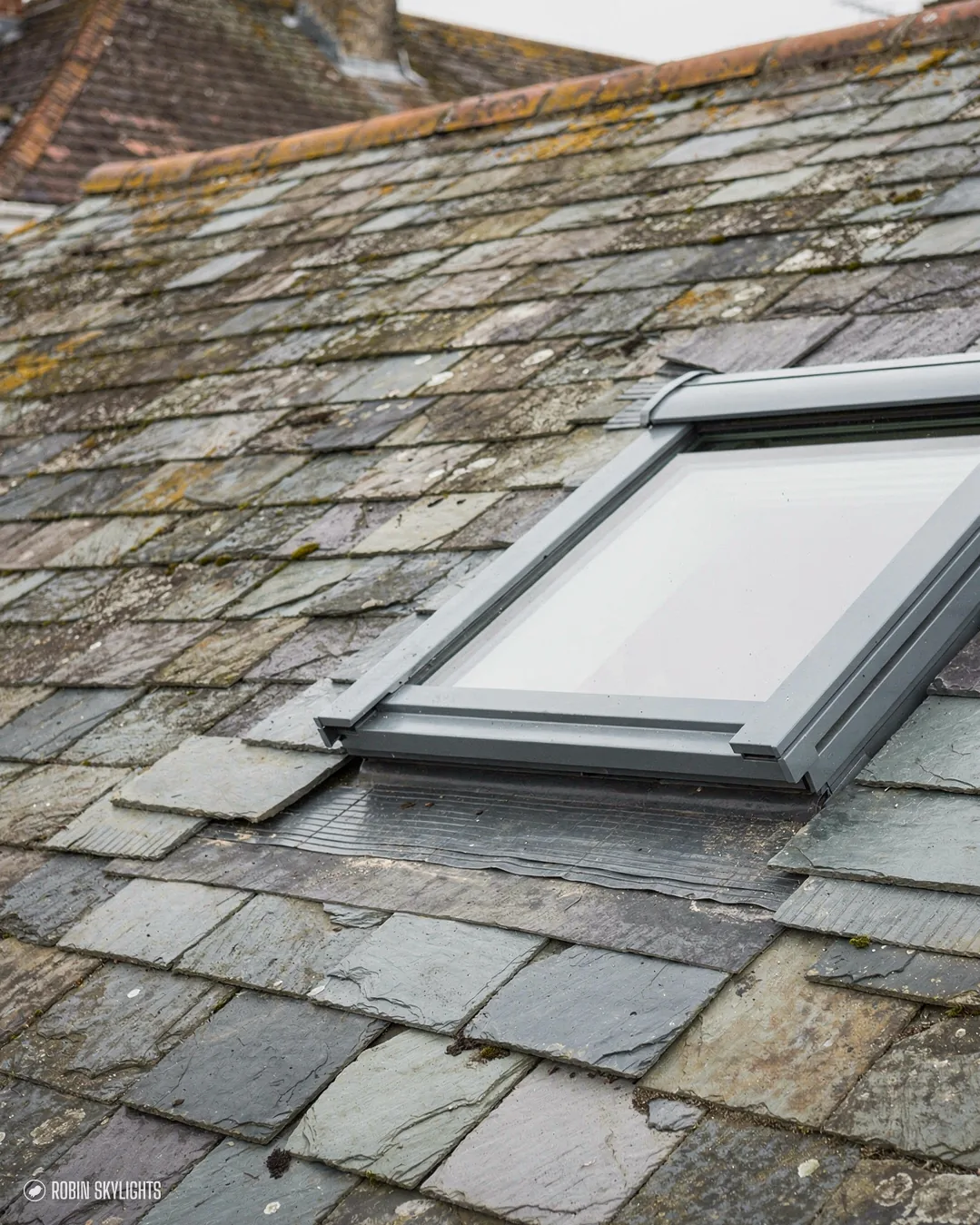
On a tiled or slated pitch, a roof window is joined to the covering by a flashing kit made for that tile or slate. Where the weather arrives hard, we check the laps and the way the flashing sheds water, because that edge takes the wind first. On a flat roof, the equivalent is the raised border and the way the finish is dressed up it.
Light on a high site
Hilltop villages often have wide skies and long views. Inside the house, the benefit only arrives if the opening is placed to use it. A roof window set low on the slope lets a seated person see out. A flat rooflight set over the deepest part of a room draws the sky into its middle. Choosing the hour when the room feels dullest, we look up through the planned position to see which patch of sky it would catch, because a window facing the house next door gains less than one angled towards open sky.
The survey
The survey is free and it tells us what is needed before any figure appears. We measure, we look at the loft and the covering, and we put a price in writing that stays as written.
02
Station Road and the houses built for Leicester
The larger houses in Station Road were built for middle-class commuters travelling to Leicester. That tells us something useful: a street of substantial homes, put up for people who could afford the daily fare, usually carries roofs with more height, more slopes and more rooms under them than a modest terrace would.
One older house in the village has an early eighteenth-century service wing of brick laid in Flemish bond attached to it. Which house it is matters less than the point: Desford holds buildings of very different ages side by side, so no two roofs get the same assumption.
Bigger roofs, deeper rooms
In a larger house, the dark spots are the ones in the middle of the plan: the stairwell, the landing, a bathroom set back from the outside walls. A big roof gives room to run a light pipe, or to put a roof window above a landing, and the survey checks what lies in between.
- Flemish bond
- A brickwork pattern that alternates the long face and short end of each brick along a course.
- Service wing
- A part of an older house that held the kitchens and working rooms.
- Flashing kit
- The set of shaped pieces that seals a roof window into the covering.
- Light pipe
- A narrow reflective tube that carries daylight from the roof into a room below.
Roofs of an older house
An older roof can have rafters that are not evenly spaced and a covering that has been patched over the years. Before any opening, we measure the gaps and check the state of the timbers around them. If the covering is tired near the proposed spot, we tell you, and we agree how to deal with it before the work begins.
Loft rooms
A loft converted for a bedroom or a study is a natural home for a roof window. Two side by side give a lot more light than one, and the pair can be sized to match the chimney, the rafters or the room's proportions. We also check the headroom beside the window, so the sash can open without meeting a rafter or a bed head.
03
Hinckley and Bosworth, and a conservation area at the middle
Desford is a Leicestershire village, so planning belongs to Hinckley and Bosworth Borough Council. The Desford conservation area sits on the village centre point, 0.03 km from it, and was designated on 9 January 1981. It holds 14 listed buildings: two at Grade II* and twelve at Grade II. Out to 1.5 km, the national list shows 15 buildings, two at Grade II* and thirteen at Grade II.
Fourteen of the fifteen listed buildings counted out to 1.5 km sit inside the conservation area. Living in the centre makes it more likely your own house is on that list, and then consent is needed before we open the roof; an unlisted house there can usually go ahead under permitted development, Article 4 aside.
What it asks of a rooflight
For a listed house, the roof cannot be opened up without listed building consent. In the conservation area, an Article 4 direction would change the answer, so we check for one, and a rear slope leaves the street front untouched. We prefer to find all this out before we draw anything, so the quote we give you is for something that can go ahead.
The England-wide conditions are explained on the page for planning permission for rooflights, and we do not repeat them here. Our contribution is local: which council, which slope, and whether the house has a listing that changes the sequence.
14listed
in the Desford conservation area (1981)
15listed
out to 1.5 km, two at Grade II*
Notifying Building Control
When the work calls for it, we tell Building Control ourselves. Is the finished work up to standard? It is fitted to current Building Regulations. You get the paperwork at the end.
04
Coal, a railway and a B road
How the village got its line, and how we reach it.
In the nineteenth century coal mining became a large industry in west Leicestershire. The Leicester and Swannington Railway was built through the parish in 1832, at first to haul coal from the coalfields to Leicester. The Midland Railway took the line over in 1845 and had extended it to Burton upon Trent by 1848. British Railways withdrew passenger services in 1964, and the Leicester to Burton line carries only goods traffic today.
The old Desford station, 1.2 km from the centre, closed to passengers long ago, so the road is the only way in for us.
The road in
Leaving Nottingham to the south-south-west, the run to Desford is 27.8 road miles and takes about 43 minutes. The classified road within about a kilometre of the village is the B582. This is the outer part of our patch: just inside the limit, and a trip we plan with care.
27.8road miles
south-south-west of Nottingham
43minutes
at the wheel in normal traffic
What we do before we set out
Because the drive is long, we make sure the survey visit counts. When booked, we ask what the room is like, where a van can stand, and whether the loft can be entered. If a quick set of photographs helps us prepare, we may ask for them. After the visit we send a written quote, and that is a fixed price, whatever happens on the day.
A survey is free, and the quote we put in writing will hold.
| Year | Event |
|---|---|
| 1832 | Leicester and Swannington Railway built through the parish |
| 1845 | Midland Railway takes over the line |
| 1848 | Line extended to Burton upon Trent |
| 1964 | Passenger services withdrawn |
05
What we would fit in a Desford house
With such a range of houses, we start from the room, not the street. Three situations come up.
A converted loft in a larger house
Where a loft room has been fitted out, a roof window is the natural choice. It frames a view of a wide sky and opens for air. We can also replace an old unit in the same opening if the glass has misted or the frame has aged.
A deep ground-floor room under a flat roof
A kitchen or garden room with a flat roof usually has one dark end. A flat roof rooflight or a lantern puts daylight over that end. We build the border high enough to stay clear of standing water, which is a good habit on a windy site.
A stair or landing that nothing lights
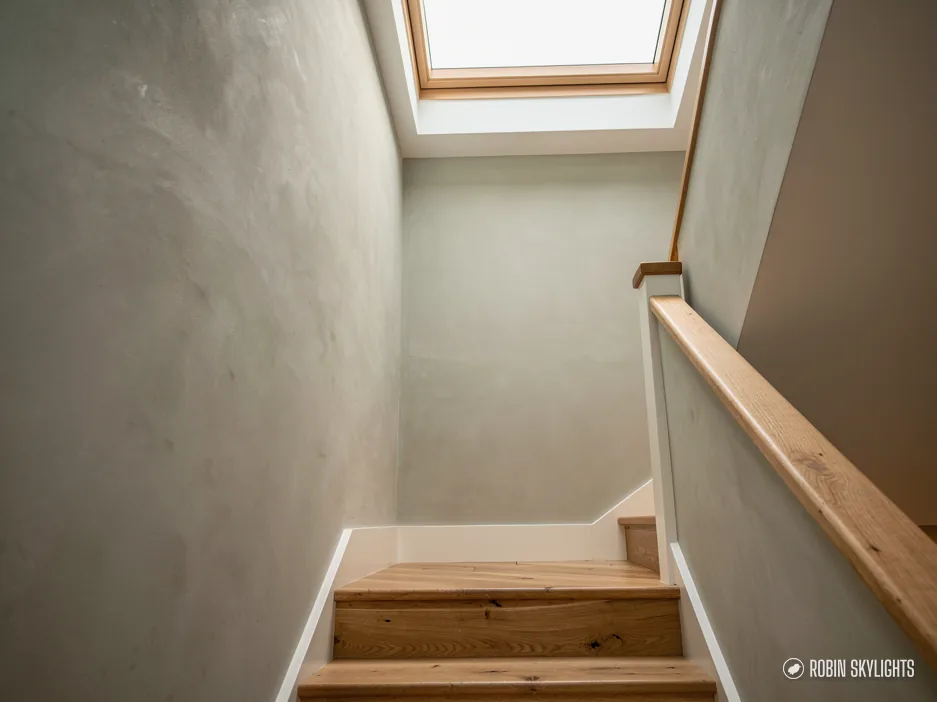
A tall house often has a stairwell with no window of its own. A sun tunnel can carry light down from the roof through a long run, and the survey tells us whether the loft allows it.
Conservation area work
For a house on the list, or one within the protected centre, our conservation rooflights are low-profile and sit close to the slope. Listing and Article 4 status come first, then the design.
Guarantee
Our workmanship comes with ten years of guarantee in writing. Our areas we cover index shows the rest of the patch.
Worth knowing before a Desford survey
Who is the planning authority in Desford?
The answer is Hinckley and Bosworth Borough Council. Desford sits in its area, and the village has its own conservation area, designated in 1981, with 14 listed buildings inside it. Before we order, your address goes to the council for checking. You then know if an Article 4 direction applies or a listed building needs consent.
Is 27.8 miles too far for you?
No. Desford is 27.8 road miles out of Nottingham and about 43 minutes at the wheel, which keeps it inside our 30-mile area. The survey is free here as it is everywhere. We plan the visit so that one trip gathers everything needed to give you a written, fixed quote.
Our house is old and the roof has been repaired before. Can it take a roof window?
Often, yes. We measure the rafter spacing, look at the timbers round the proposed opening and check the covering. If something needs work first, we say so on the survey and write it into the quote. Nothing is cut until the roof has been read properly.
Can a rooflight stand up to exposed weather on a hill?
A well-fitted one can. The details that matter are the flashing on a pitched roof and the raised border on a flat one, because those edges meet the wind and rain first. We specify both for your roof's covering and fit them to current Building Regulations. The workmanship carries our written ten-year guarantee.